Looking Back: What We Said Last Year
In the H1 2024 and H1 2025 editions of Namaskar, we argued that the end of the ultra-low-interest-rate era had created a generational opportunity in fixed income — urging fellow Chartered Accountants to focus on elevated yields, resist the cash-trap, and distinguish between uncertainty and risk. Markets have validated this view. Since 2024, Silverdale Funds have delivered total returns of 33% to 49% across strategies, navigating geopolitical tensions, tariff disruptions, and market volatility. Crucially, the opportunity has not been exhausted. Bond yields today remain 100%–200% above their post-2010 averages. Uncertainty is elevated, but so are yields.
A New World Order: Geopolitics, Tariffs & AI
The global economy is undergoing one of its most consequential transitions in decades. Stable geopolitics, expanding globalisation, and predictable supply chains have given way to a world shaped by geopolitical realignment, trade fragmentation, and rapid technological disruption. For fixed income investors, the implications are direct: geopolitics drives energy prices and risk premia; tariffs drive inflation; and AI drives growth and productivity. Together, they determine interest rates, credit spreads, and ultimately, investment returns.
Macroeconomic Snapshot
Headline CPI spiked to 4.2% in May 2026, with 60%–70% attributable to energy prices, while core inflation remained contained at 2.8%. Since then, Brent crude has retreated from approximately US$88 to US$75 per barrel. Easing shelter costs and moderating wage growth are expected to provide a gradual disinflationary tailwind through the balance of the year.
Labour market dynamics are nuanced. Nonfarm payroll growth has moderated sharply to approximately 50,000 jobs per month, well below the long-term average of 150,000, yet the unemployment remains stable at around 4.3%, owing to tighter immigration policy, approximately 30,000 monthly deportations, and 20,000 monthly retirements.
GDP growth remains resilient, underpinned by AI-related capital expenditure and the full expensing of capital investment introduced from 2026, which has materially reduced corporate tax liabilities and supported near-term earnings. Corporate default rates remain near 25-year lows across investment-grade and BB-rated issuers.
The Federal Reserve held rates steady at 3.50%–3.75% through H1 2026. Unlike the emergency tightening of 2022, when rates were near zero and required aggressive correction, the current stance reflects considered patience rather than crisis management. Any future adjustments are expected to be measured, providing a stable backdrop for fixed income investing.
Case for Bonds: Discipline Over Prediction
The past several years have demonstrated how difficult it is to accurately forecast inflation, central bank policy, or geopolitical outcomes. Fortunately, successful fixed income investing depends less on prediction and more on discipline. Empirically, the starting yield explains approximately 89% of a bond portfolio's long-term return.
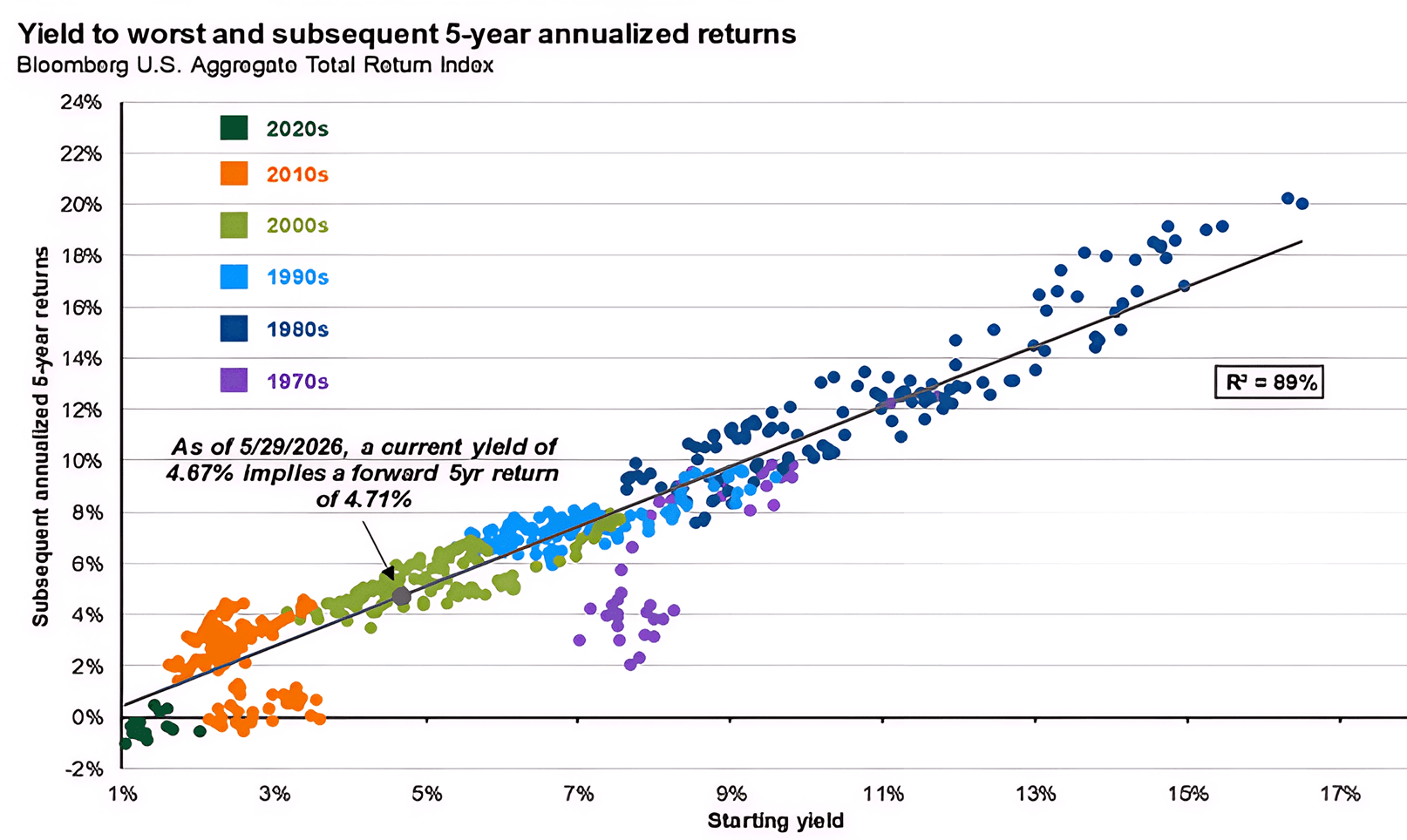
With yields across quality fixed income segments in the top quartile of the past 20 years, investors can lock in attractive income streams without needing to correctly call every macroeconomic outcome. Our fellow Chartered Accountants will appreciate that in an environment of persistent uncertainty, the ability to secure visible, contractual returns is itself a source of significant investment value.
High Yield Bonds: Equity-Like Returns, Structurally Improved Quality
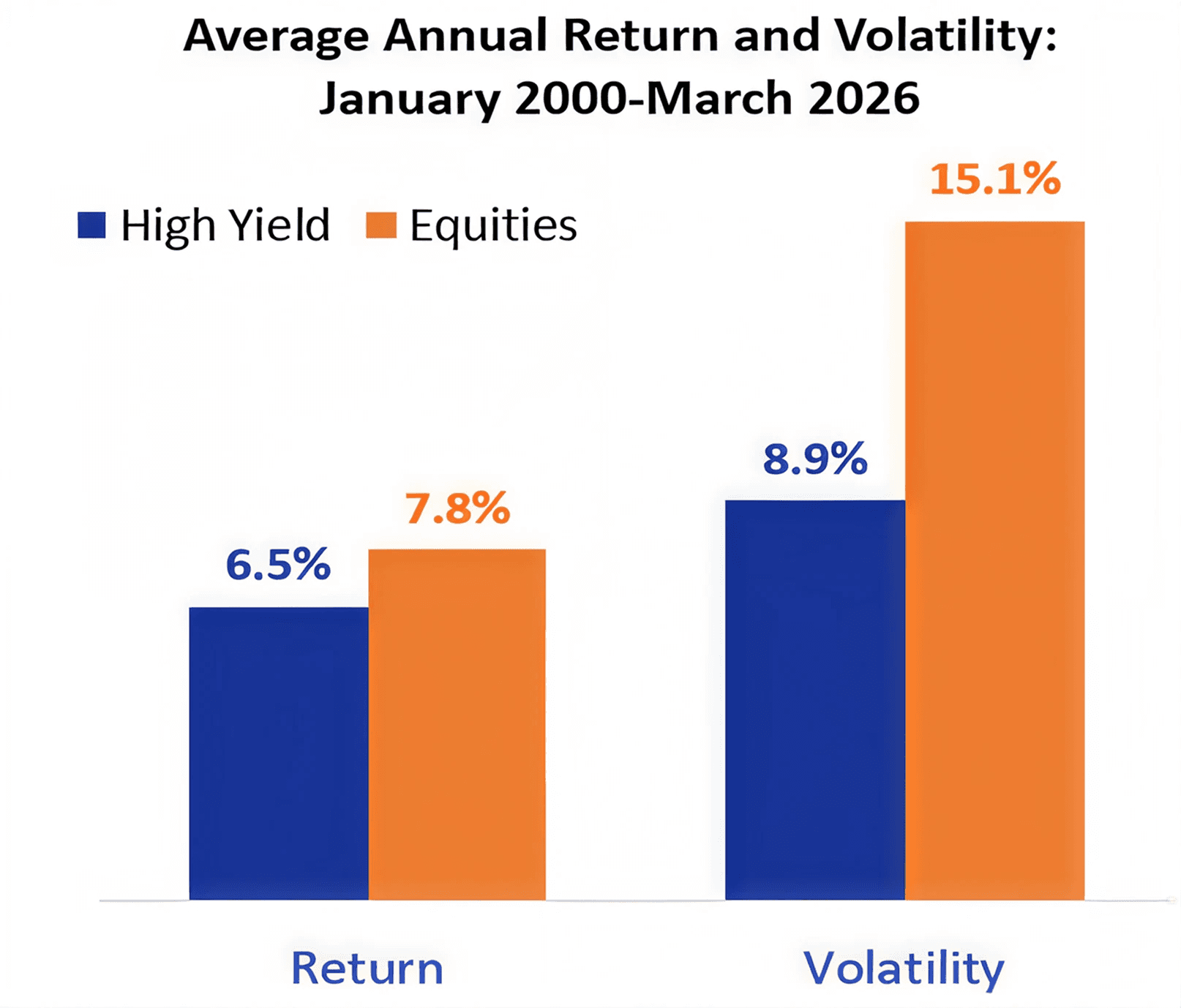
For investors seeking higher income, and particularly for corporate treasuries deploying surplus medium-term liquidity, High Yield bonds represent one of the most compelling opportunities in global fixed income today. Over the past 25 years, this asset class has delivered annualised returns of approximately 6.5%, closely tracking the S&P 500's 7.8%, but with materially lower volatility of 8.9% versus 15.1% for equities. This risk-return efficiency has been consistent across a full range of market cycles.
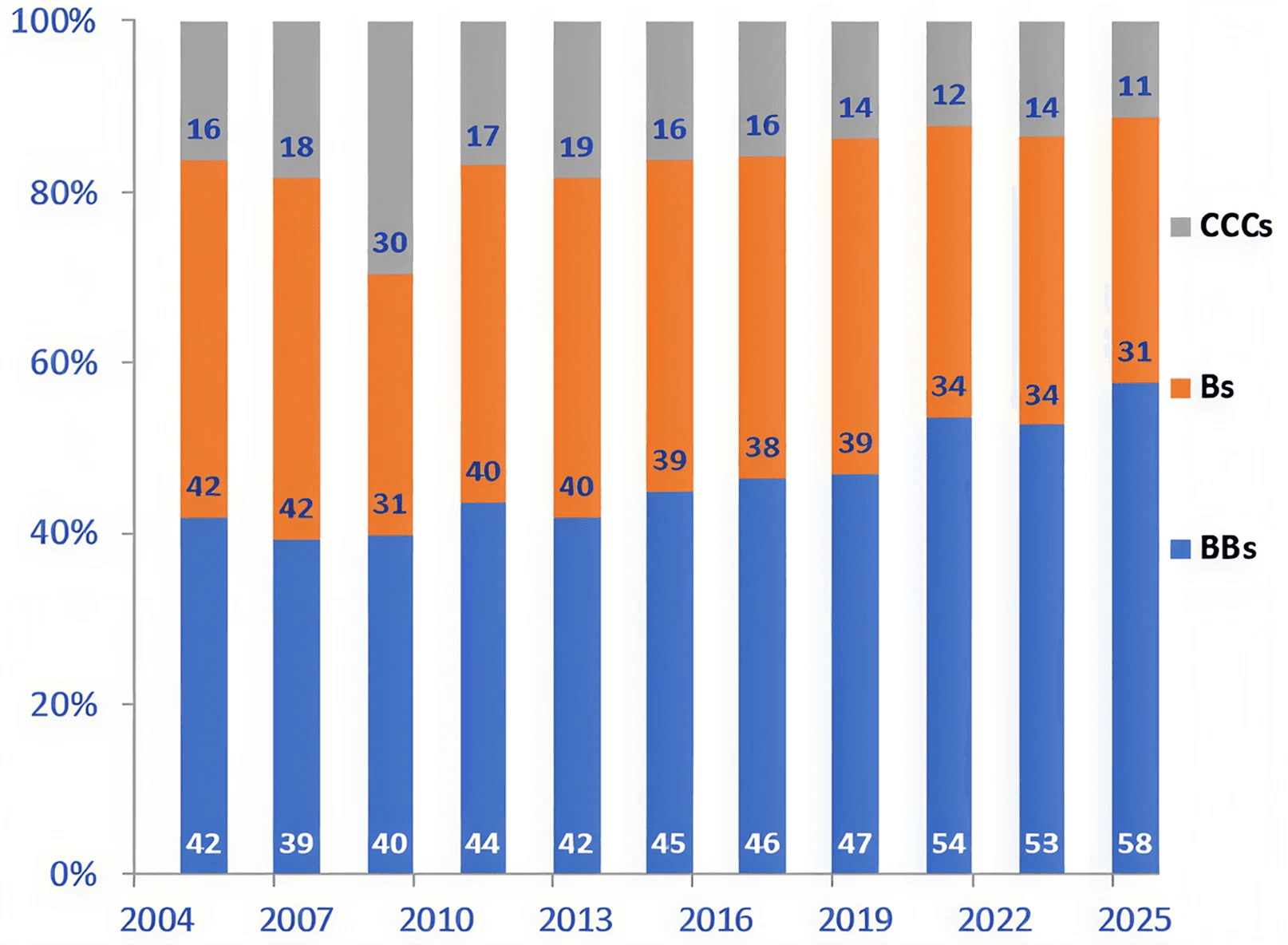
Importantly, the structural quality of the High Yield market has improved substantially, as weaker credits have migrated to private markets. BB-rated bonds now exceed 50% of the universe, up from 40% a decade ago. Secured bonds have risen to 36% from 24%, while subordinated debt has contracted to just 3% from 12%. Average maturity has shortened from 8.3 years in 2004 to 4.8 years today, reducing spread sensitivity and refinancing risk. The universe itself has contracted by 11% since 2021, adding scarcity tailwinds. Nearly 86% of defaults occur within the CCC-rated segment, leaving the investible high yield universe with significantly lower effective default rates.
This dynamic is demonstrated in the performance of Silverdale Credit Opportunities Fund which has delivered 49% since FY2024, approximately 23% in FY2024, 16% in FY2025 and 4% year-to-date through May 2026. These returns are comparable to those typically associated with private credit, achieved with the material advantages of daily liquidity, transparent mark-to-market pricing, and a diversified portfolio of publicly traded securities.
Target Return Funds: When Predictability Matters Most
Not every investor is positioned, or inclined, to accept interim mark-to-market volatility in exchange for higher potential returns. For those who prioritise certainty of outcome, a fixed maturity structure offers a compelling and time-tested solution.
By holding a diversified portfolio of bonds to a defined maturity date, investors gain visibility on expected returns and income streams while substantially reducing exposure to short-term market fluctuations. The starting yield is locked in at inception; carry and pull-to-par mechanics drive performance over the fund's tenure, while prudent leverage can enhance returns. Bloomberg Systematic Strategies has assessed the probability of a five-year fixed maturity portfolio achieving its target return at 91.5% . Silverdale Fund VCC's track record across every vintage, stands at 100%.
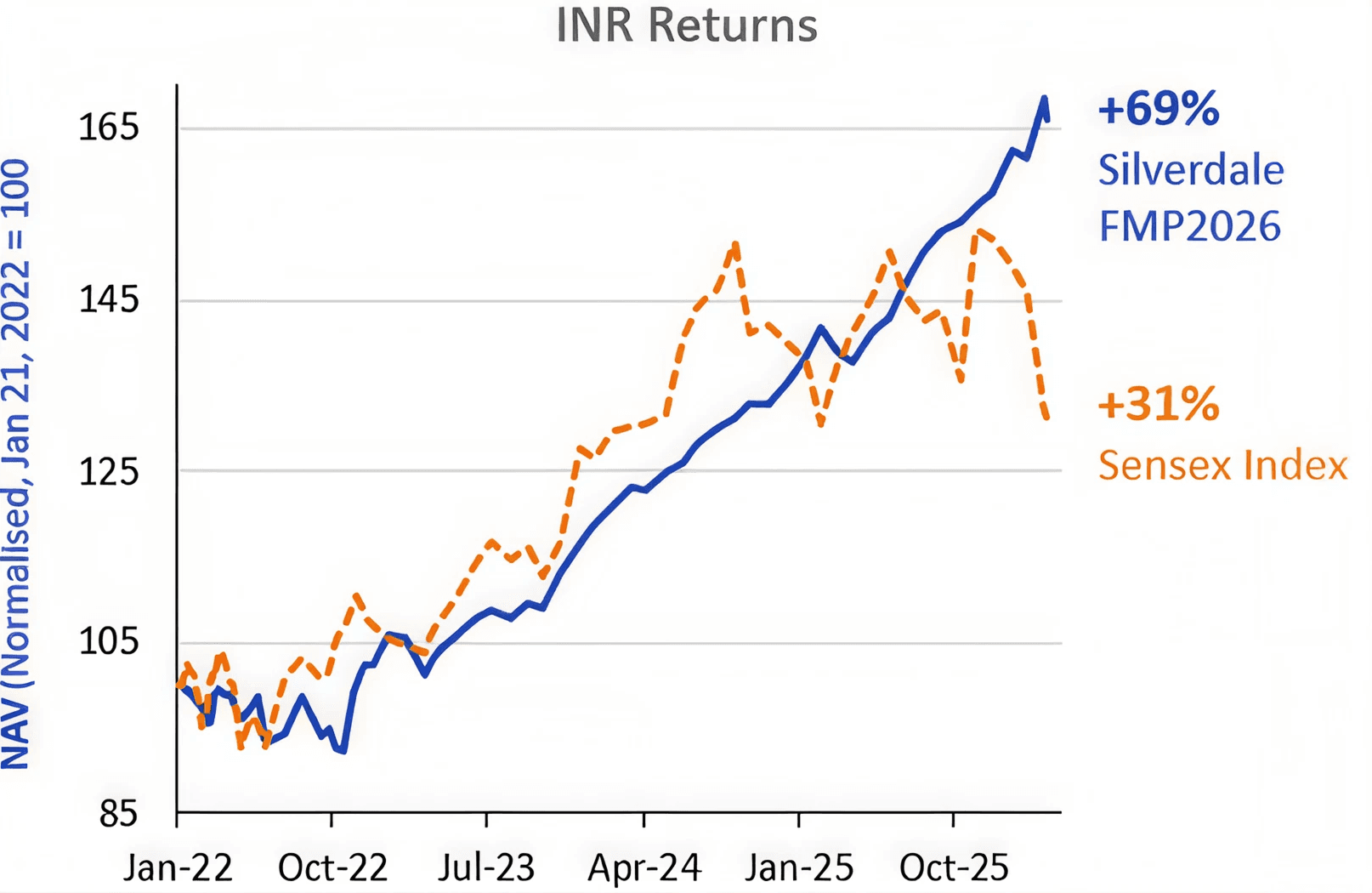
Case Study: Silverdale Fixed Maturity Fund 2026 delivered an absolute return of +32.6% over 4.2 years, against a range of -5.7% to +6.7% across major global indices over the same period. In INR terms, the fund returned +69%, against a Sensex return of +31% over the equivalent horizon. The case illustrates a central proposition of this series: that disciplined fixed maturity investing — locking in prevailing elevated yields at inception and holding to maturity — can generate returns for fellow Chartered Accountants that are not merely competitive with equities, but superior, with materially lower volatility and contractually visible outcomes from day one.
The Currency Advantage
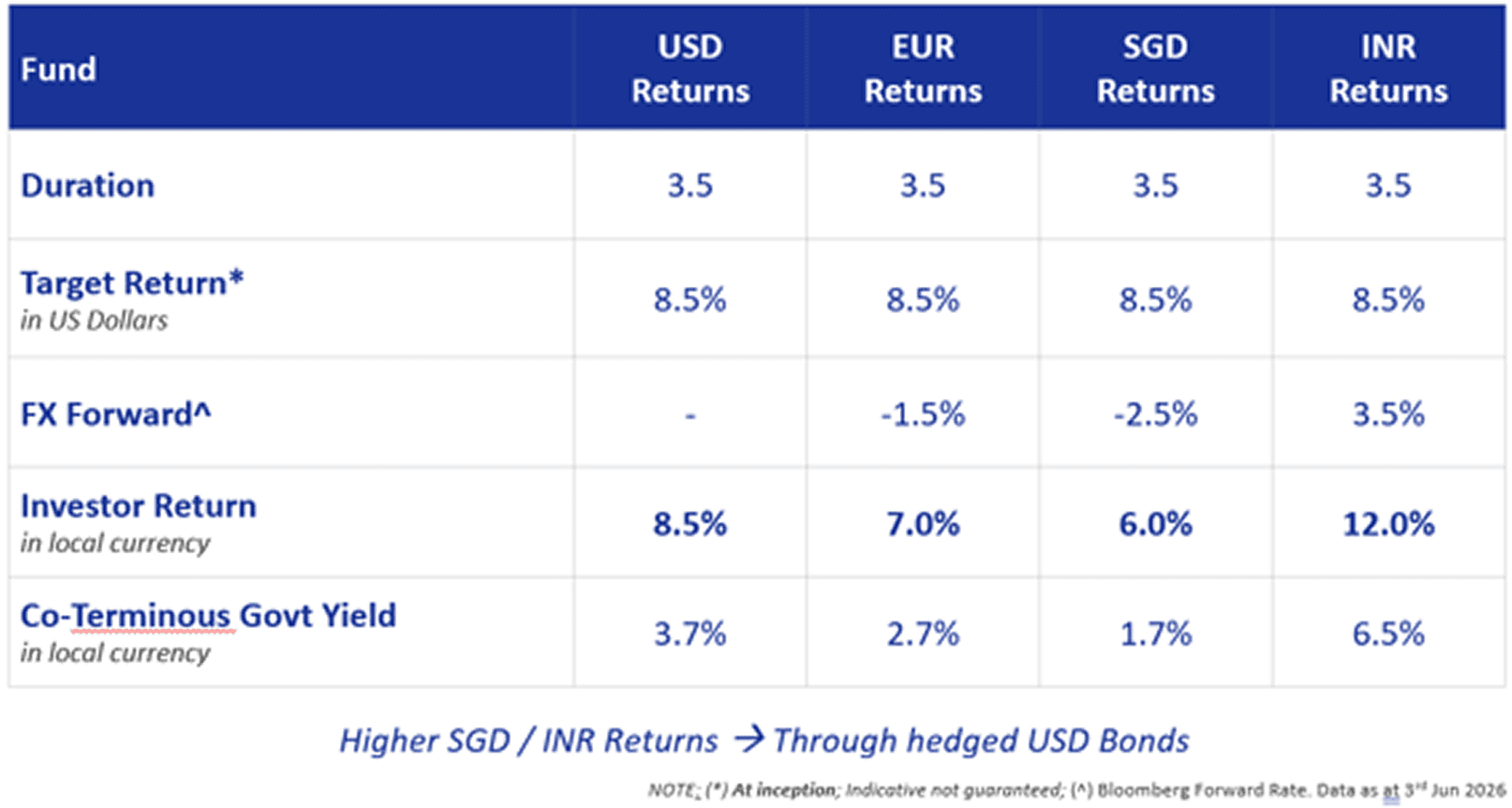
For non-USD investors and corporate treasuries managing multi-currency exposures, USD fixed income offers an additional dimension of value. Through currency swaps, a prudently leveraged USD target return fund generating 8%–9% per annum translates to approximately 6%–7% in SGD-hedged terms and 10%–12% in INR-hedged terms — two to three times the respective domestic risk-free rates — while simultaneously accessing the diversification and liquidity of the world's deepest bond market.
Executive Summary
The key takeaways for fellow Chartered Accountants are:
Starting yield is destiny. Approximately 89% of fixed income returns are determined by the starting yield. Today's elevated levels provide a compelling entry point, without requiring accurate prediction of macro-outcomes.
High Yield offers equity-comparable returns with lower volatility and far better quality of earnings, transparency and liquidity than that provided by private credit.
Target Return Funds are the appropriate vehicle when certainty matters. Every Silverdale Target Return Fund has delivered its envisaged return, across every vintage and every market cycle, within ±0.25% per annum.
Discipline over prediction. Volatility is not risk. Disciplined investment in well-diversified portfolios, supported by prudent leverage, pull-to-par mechanics, and active risk management, is a more reliable source of returns than macro forecasting.
Conclusion
The future will bring new surprises — geopolitical, technological, and economic. What remains within your control is the discipline to invest at attractive valuations, manage risk prudently, and allow compounding to work. In fixed income, that discipline begins with purchasing quality bonds and allowing time to do the rest. Hence: Bonds are Forever!
Disclaimer: This article is for informational purposes only and does not constitute financial advice. Please consult a qualified financial professional before making any investment decisions.